
The Fastest Answer Isn't Always Leadership | Mindshift Moments
The Moment:
You're hustling to your next meeting, hoping to refill your water bottle before it starts. One of your direct reports catches you in the hallway. "Hey, quick question..." She starts explaining a decision she's trying to make on a project. You're already mentally in your next meeting. Without even thinking, you interrupt, "Neither of those. I'll take care of it after my meeting,” and keep walking. It feels efficient…you just saved both of you time.
The Mindshift:
Your team might have just learned three different leadership lessons that you didn’t intend to teach them. Because every interaction teaches something. When you (unintentionally or otherwise) remove someone else's opportunity to think, decide, or own the work, they may learn :
It felt like a small moment. She asked a question; you answered it; everyone kept moving. Except...that's not actually what happened. The moment you said, "I'll take care of it after my meeting," you taught her something: Oh, I don’t really own this. Or maybe it is always safer to ask her than to decide on my own. Or even, she will always make the important decisions anyway. Almost definitely, you taught her to be dependent on you.
You took ownership back from her before she even had the chance to open it - not because she couldn’t do it, but because it felt faster or easier for you to do it yourself.
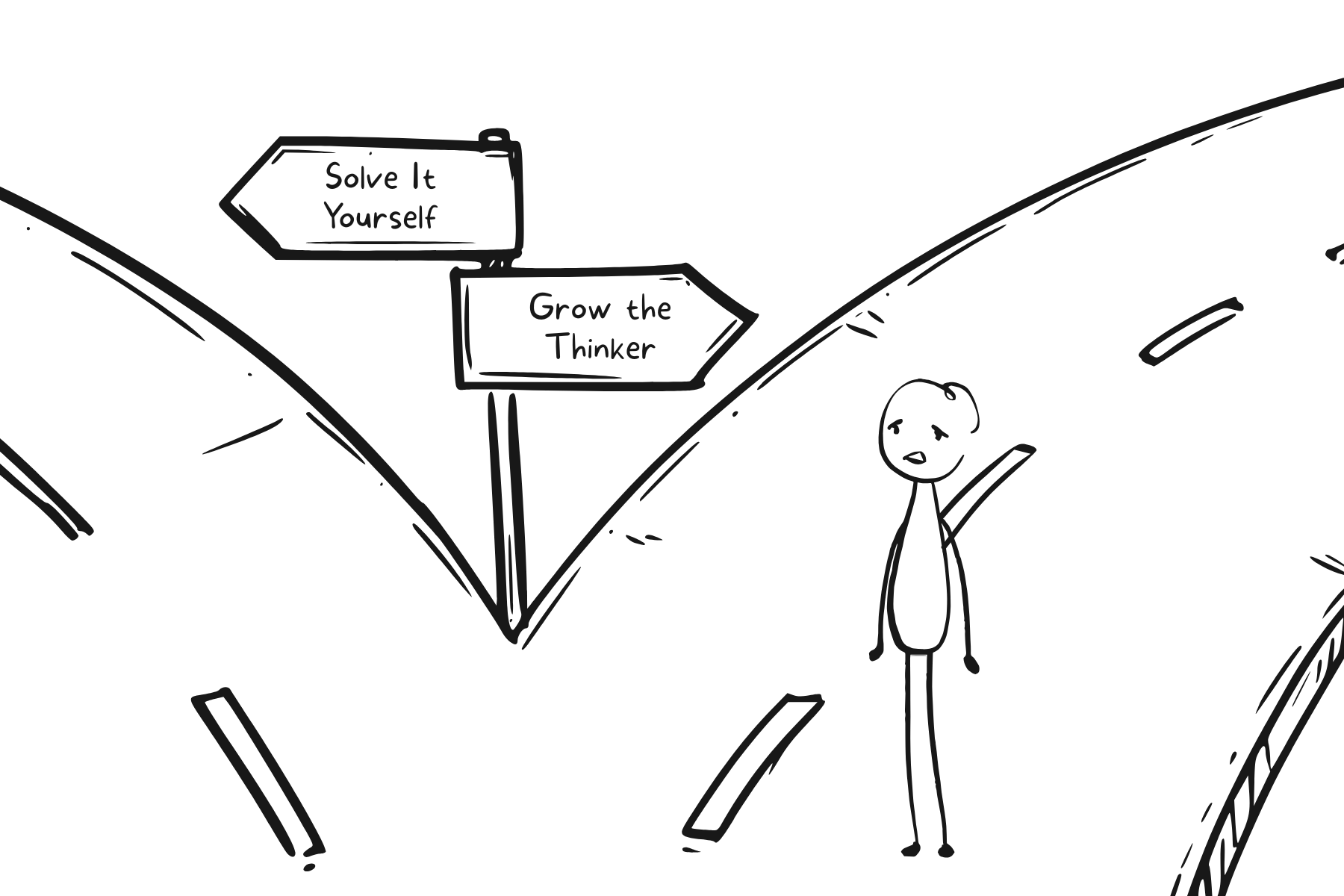
That wasn't your intention - you were trying to be helpful or save time. But development rarely happens when leaders do it themselves or give away answers. It happens when leaders create space for other people to think, wrestle, decide, and learn.
Sometimes the fastest way to finish today's work is the slowest way to build tomorrow's team.
The Strategies:
1. Replace answers with ownership.
The next time someone brings you a decision they could likely make themselves, resist giving your answer first. Instead, ask questions like:
- What options are you thinking about?
- What is your recommendation?
- What has you leaning towards that option?
- What do you see as pros and cons for each option?
- Which stakeholders might see it differently than that?
- What do you want to do next?
Your goal isn't to see if they get the "right" answer. It's to help them build the thinking capacity they'll need the next time you're not there.
2. Expose the invisible trade-offs.
Most of us delegate work.Far fewer of us delegate decisions. The next time you assign a project, don't just explain what needs to get done. Be explicit about what decisions they own. Try saying: I'd like you to own the decisions related to X. If you get stuck, I'd love to be a thinking partner, but I don't want you waiting for my approval.
When people know where they have decision-making authority, they stop bringing every choice back to you. Development doesn't happen because people have more tasks - it happens because they have ownership.
3. Catch yourself taking work back.
For one week, notice every time you're about to say, "I'll just take care of it." Before you do, pause and ask yourself: Am I solving today's problem, or am I stealing someone else’s opportunity?
Sometimes you'll absolutely need to step in. And you'll probably notice there are more moments than you realized where someone else was ready and simply needed you to let them.
Every leader wants a capable team, but that doesn’t get built by watching someone else make the decisions. It happens one uncomfortable moment at a time - when people wrestle with ambiguity, make a judgment call, learn from the outcome, and realize they were more capable than they thought.
The next time you're tempted to step in because it's faster, remember: today's quickest answer might become tomorrow's biggest bottleneck. The goal isn't to become less helpful; it's to become the kind of leader whose team no longer needs your help for the same decisions.